Skincare Masks & Peels for Women 50+ | What Actually Works (And What to Skip)

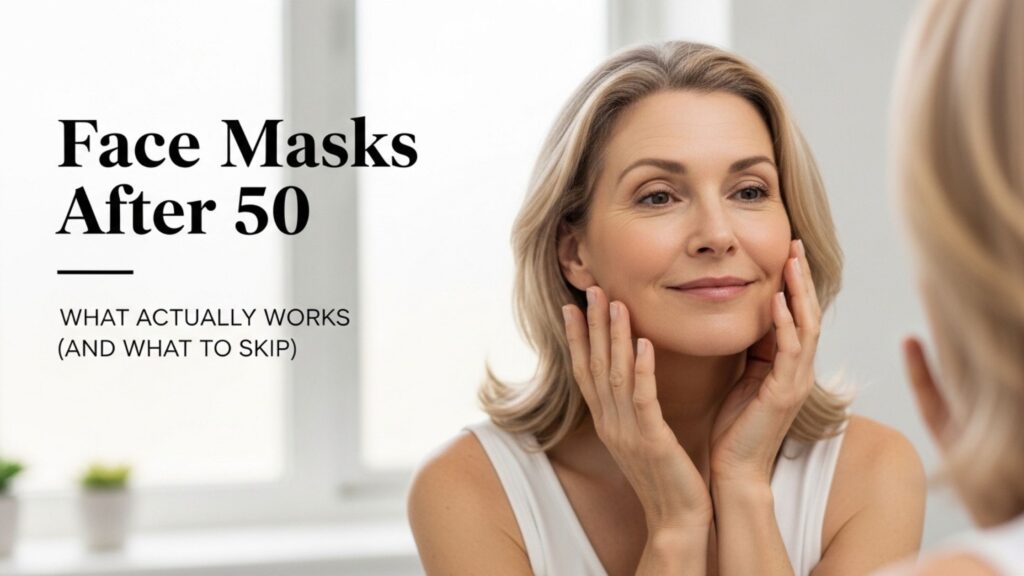
Nobody warns you about this part.
Not about wrinkles — you expected those. Not about grey hair or changing energy. What nobody mentions is the quiet moment when your skincare simply… stops working. The mask you’ve used for years. The peel your friend swears by. Products that should be doing something — and aren’t.
It’s not the products. It’s not you. It’s that your skin crossed a biological threshold, and the beauty industry mostly pretended it didn’t happen.
After 50, your skin operates by completely different rules. The masks formulated for “all skin types” were tested on 28-year-olds. The peels trending on Pinterest were designed for skin that still renews itself every 28 days. Yours doesn’t anymore — and that one fact changes everything about what works.
Here’s what actually does.
Why Masks + Peels Hit Differently After 50

That feeling of your skincare “not working anymore”? It’s not in your head. It’s biology.
After 50, three things change that make masks and peels both more effective — and more risky — than they were in your younger years.
Skin cell turnover slows down. In your 20s, skin renews itself roughly every 28 days. After 50, that cycle stretches to 45–60 days. Dead skin cells sit on the surface longer, causing dullness, uneven texture, and a complexion that looks tired even when you’re not. Exfoliating masks and peels directly address this — but need to be chosen carefully.
Skin barrier becomes more fragile. Lower estrogen = thinner skin with a weaker lipid barrier. Harsh scrubs, high-concentration peels, or over-exfoliation can strip this barrier and cause redness, sensitivity, and long recovery times. The goal is effective exfoliation without barrier disruption.
Collagen production drops significantly. After 25, collagen production declines by about 1% per year. By 50, the cumulative effect is visible: less firmness, more sagging, deeper lines. Masks and treatments that stimulate collagen — rather than just temporarily plumping — become genuinely valuable.
The 3 Types of Masks Worth Knowing
Not all face masks do the same thing. For women 50+, these are the three categories that matter:
1. Hydrating Masks — Your Weekly Non-Negotiable

What they do: Flood skin with moisture. Instantly plump fine lines, restore suppleness, and give that glass skin effect that makes skin look healthy and luminous.
Why they matter after 50: Mature skin is almost always dehydrated — not just dry on the surface, but lacking water content in deeper layers. A hydrating mask addresses this at a level your daily moisturizer can’t reach in a 60-second application.
Key ingredients to look for:
- ✓ Hyaluronic acid (draws water into skin)
- ✓ Ceramides (seals moisture in)
- ✓ Glycerin (humectant, attracts moisture)
- ✓ Aloe vera (soothes + hydrates)
- ✓ Peptides (hydration + collagen support)
How often: 2–3 times per week. These are gentle enough for frequent use.
Great options:
- Peter Thomas Roth Water Drench Hyaluronic Cloud Mask — cult favourite for plumping
- Neutrogena Hydro Boost Hydrating Overnight Mask — drugstore price, serious hydration
- Laneige Water Sleeping Mask — K-beauty classic, works overnight
2. Exfoliating Masks + Peels — The Glow Makers

What they do: Remove the buildup of dead skin cells sitting on the surface, revealing fresher, brighter skin underneath. Done correctly, they improve texture, fade dark spots, and make your entire skincare routine work better — because products absorb properly into clean skin.
The two types:
Physical exfoliation (scrubs, granules) — largely not recommended for mature skin. The friction from physical scrubs can cause micro-tears in already-thin skin and trigger inflammation. Skip these.
Chemical exfoliation (AHAs, BHAs, enzyme peels) — the right approach for 50+. No friction. Dissolves dead skin cells gently and predictably.
The ingredients that matter:
| Ingredient | Best For | Strength |
|---|---|---|
| Lactic acid (AHA) | Dry, mature skin — hydrating AND exfoliating | Gentle |
| Glycolic acid (AHA) | Dark spots, uneven texture | Medium |
| Mandelic acid (AHA) | Sensitive mature skin | Gentle |
| Enzyme peels (papaya, pineapple) | Very sensitive skin, beginners | Very gentle |
| Salicylic acid (BHA) | Congested or combination mature skin | Medium |
⚠️ Important for mature skin: Start with lactic acid or enzyme peels before moving to glycolic. Always patch test. Never use exfoliating masks on compromised or irritated skin.
How often: Once a week maximum to start. Mature skin needs longer recovery between exfoliation sessions than younger skin.
Worth trying:
- Dr. Dennis Gross Alpha Beta Universal Daily Peel — pre-soaked pads, two steps, foolproof application
- The Ordinary AHA 30% + BHA 2% Peeling Solution — powerful, use with caution, 10 minutes max
- Pixi Glow Mud Mask — glycolic acid in a gentler rinse-off format
3. Firming + Collagen Masks — The Long Game
What they do: Deliver active ingredients that support collagen synthesis, improve elasticity, and firm the appearance of skin over time. These don’t produce overnight results — but with consistent use, the difference is measurable.
Why they matter at 50+: No topical product can replace lost collagen directly (collagen molecules are too large to penetrate skin). What these masks can do is deliver ingredients that stimulate your skin’s own collagen production and protect existing collagen from further breakdown.
Key ingredients:
- ✓ Retinol or retinyl palmitate (gentler retinol for sensitive skin)
- ✓ Vitamin C (antioxidant + collagen synthesis support)
- ✓ Peptides — especially Matrixyl and copper peptides
- ✓ Niacinamide (barrier support + visible pore reduction)
- ✓ Adenosine (K-beauty firming staple, proven anti-wrinkle)
How often: 1–2 times per week. These are treatment masks — not daily use.
Worth trying:
- 111SKIN Rose Gold Brightening Facial Treatment Mask — luxury collagen + peptide sheet mask
- Drunk Elephant T.L.C. Sukari Babyfacial — AHA/BHA + firming actives, intense treatment
- COSRX Advanced Snail 96 Mucin Power Sheet Mask — snail secretion filtrate, proven repair + firming
At-Home Peels vs Professional Peels — Know the Difference
This comes up constantly in beauty treatments discussions, and it’s worth a clear answer.
At-home peels (like The Ordinary, Dr. Dennis Gross, or First Aid Beauty pads) use lower concentrations of acids — typically 5–30% AHA/BHA. They’re designed for regular use and produce gradual results with minimal downtime. These are appropriate for self-application.
Professional chemical peels (available at dermatologist offices and medical spas across the USA and UK) use much higher concentrations — 30–70% — and penetrate deeper layers of skin. They require professional application, proper neutralisation, and recovery time ranging from a few days to two weeks depending on depth.
For women 50+, professional peels can be genuinely transformative for addressing:
- Deep-set hyperpigmentation and age spots
- Significant texture irregularity
- Acne scarring
- Overall skin dullness that at-home products can’t fully address
The three main professional peel types:
| Peel | Depth | Downtime | Best For |
|---|---|---|---|
| Superficial (glycolic, lactic) | Surface only | None–1 day | Maintenance, glow, mild texture |
| Medium (TCA 20–35%) | Mid-dermis | 5–7 days | Dark spots, deeper lines, pigmentation |
| Deep (phenol) | Deep dermis | 2–3 weeks | Significant aging, deep wrinkles |
Practical recommendation: If you’re new to chemical exfoliation, start at home with a gentle lactic acid mask for 3–6 months. Once your skin is accustomed to acids, a consultation with a dermatologist about a superficial or medium peel is a worthwhile investment — particularly for stubborn dark spots or uneven texture that home products haven’t fully addressed.
Homemade Skincare Masks — What Works, What Doesn’t

There’s something genuinely appealing about walking to your kitchen and making something good for your skin. No ingredients list to decode, no $60 jar to justify. And honestly? Some natural face skincare ingredients really do work.
But for mature skin, a few very popular DIY masks can cause real damage — and the internet won’t always tell you that. Here’s the honest breakdown:
✓ Actually effective natural ingredients:
Honey — natural humectant with mild antibacterial properties. A pure honey mask (manuka if budget allows) applied for 15–20 minutes genuinely hydrates and soothes. Safe for all skin types.
Oatmeal — colloidal oatmeal is clinically proven to calm inflammation and support the skin barrier. Mix with warm water or milk for a soothing, anti-inflammatory mask.
Plain yoghurt — contains lactic acid naturally. A 10-minute yoghurt mask provides very gentle exfoliation plus hydration. Particularly good for beginners nervous about chemical exfoliation.
Aloe vera — straight from the plant or pure gel. Soothing, hydrating, calms redness. Use as a mask base or on its own.
✗ Common DIY ingredients to avoid on mature skin:
- Lemon juice — far too acidic (pH ~2), causes chemical burns and hyperpigmentation, especially on mature skin
- Baking soda — disrupts skin’s natural pH, destroys the acid mantle, causes long-term barrier damage
- Apple cider vinegar undiluted — similar issue to lemon juice, causes irritation and sensitivity
- Egg whites — minimal benefit, contamination risk, can trigger reactions
Your Weekly Mask Routine — Simple and Effective
The best skin care routine is the one you’ll actually do. Here’s a simple weekly schedule that covers all bases without overwhelming you:
Monday — Hydrating mask After cleansing, apply a hydrating sheet mask or wash-off hydrating mask. 15–20 minutes. Follow with your usual moisturiser and SPF in the morning.
Wednesday — Exfoliating mask or peel Gentle lactic acid or enzyme peel after cleansing. 10 minutes for beginners, work up from there. Always follow with a hydrating serum and moisturiser — exfoliation without immediate hydration defeats the purpose.
Friday — Firming or collagen mask A peptide-rich or Vitamin C mask to end the week. Great to do in the evening — skin repairs overnight, so active ingredients applied before bed have longer contact time with skin.
Every other day — nothing This is not laziness. This is strategy. Mature skin needs recovery time between treatments. Over-masking is one of the most common mistakes women 50+ make — it strips the barrier and causes exactly the sensitivity and dullness you’re trying to treat.
Skincare Tools That Make Masks More Effective
A few basic skin care tools genuinely improve how well masks and peels perform:
Silicone applicator brush — applies masks evenly without introducing bacteria from fingers. Keeps product off hairline and brows where it can cause irritation.
Gua sha or jade roller — used after a hydrating mask while skin is still slightly damp, these improve circulation and help product absorb more effectively. Not magic — but genuinely useful for lymphatic drainage and reducing morning puffiness.
LED light therapy mask — red light (630–700nm) has clinical evidence behind it for collagen stimulation and wound healing. Not a replacement for actives, but a legitimate addition to a firming routine. At-home devices have lower intensity than clinical versions but show results with consistent use over 8–12 weeks.
Facial steamer — 2–3 minutes of steam before applying a mask opens pores and allows ingredients to penetrate more effectively. Particularly useful before exfoliating treatments.
Quick-Reference: Mask Cheat Sheet for Women 50+
| Skin Goal | Mask Type | Key Ingredient | How Often |
|---|---|---|---|
| Hydration + plumpness | Hydrating mask | Hyaluronic acid | 2–3x per week |
| Glow + even texture | Exfoliating mask | Lactic acid | Once per week |
| Dark spots + pigmentation | Chemical peel | Glycolic acid | Once per week |
| Firmness + anti-aging | Collagen/peptide mask | Peptides, Vitamin C | 1–2x per week |
| Sensitivity + redness | Calming mask | Oatmeal, cica, aloe | As needed |
Shop the Masks — Editor’s Picks on Amazon
🛒 Affiliate links — I may earn a small commission at no extra cost to you.
💧 Best Hydrating Mask Peter Thomas Roth Water Drench Hyaluronic Cloud Mask Instantly plumps fine lines. One of the best hydrating masks for mature skin — period. 👉 Check price on Amazon →
✨ Best Exfoliating Peel Dr. Dennis Gross Alpha Beta Universal Daily Peel Pads Two-step pre-soaked pads. Foolproof application, visible glow after first use. 👉 Check price on Amazon →
🌸 Best Firming + Collagen Mask COSRX Advanced Snail 96 Mucin Power Sheet Mask Repair, firm, and hydrate in one step. Snail secretion filtrate — clinically proven for mature skin. 👉 Check price on Amazon →
🍯 Best Natural / Sensitive Skin Option Burt’s Bees Moisturizing Honey Mask Clean ingredients, gentle formula. Perfect for reactive mature skin or DIY lovers who want safe natural skincare. 👉 Check price on Amazon →
🔬 Best At-Home Peel for Dark Spots The Ordinary AHA 30% + BHA 2% Peeling Solution Powerful but affordable. Use once a week, 10 minutes max. Visible improvement in texture and pigmentation within weeks. 👉 Check price on Amazon →
💡 Start with the hydrating mask + honey mask. Add the peel only after your skin is comfortable with regular masking.
Frequently Asked Questions
Can I use a chemical peel if I’m also using retinol? Not on the same day — and ideally not within 48 hours of each other. Both are exfoliating actives. Using them together significantly increases the risk of over-exfoliation, redness, and barrier damage. Alternate: retinol on some nights, peel on others. Never both at once.
My skin gets red after masks. Is that normal? Mild, temporary pinkness after an exfoliating mask is normal and fades within 30 minutes. Prolonged redness, stinging, or peeling skin is a sign the formula is too strong for your skin. Step down to a gentler option — lactic acid or an enzyme peel — and give skin two weeks to recover before trying again.
Are sheet masks worth it for mature skin? Yes — particularly hydrating and essence-based sheet masks. They create an occlusive layer that forces ingredients into skin more effectively than a standard leave-on serum. K-beauty sheet masks (COSRX, Mediheal, Laneige) offer excellent ingredient quality at accessible prices.
How long before I see results from regular masking? Hydrating masks: immediately (temporary effect). Exfoliating masks: 4–6 weeks of consistent use for visible texture improvement. Firming/collagen masks: 8–12 weeks minimum for measurable change in firmness. Consistency matters far more than the specific product.
Can I use the same mask on my neck and chest? Yes — and you should. These areas show aging from the same causes as the face and respond to the same treatments. Extend your mask application to the neck and décolletage every time.
Related searches: skincare masks for women over 50 | best face mask mature skin | chemical peel at home 2026 | glass skin routine over 50 | collagen mask anti-aging | natural face skin care 50+ | exfoliating mask dry skin | homemade skin care masks | skin care routine over 50 | beauty treatments for aging skin USA UK